
FOCUS ON PRODUCTION
PEOPLE, ENVIRONMENT AND RESPONSIBILITY
Responsible production does not depend on geography, but on approach. Through close, long-term cooperation with our suppliers, we ensure fair conditions, high quality and transparency – for the benefit of people, the environment and you as a customer.
Close to production
Since 2006 we have had our own office in Bangladesh and are present at our manufacturers every week to ensure dialogue, insight and standards.
Close to production
Since 2006 we have had our own office in Bangladesh and are present at our manufacturers every week to ensure dialogue, insight and standards.
Transparency in practice
We work on the basis of data and speak openly about our environmental impact and supplier relationships – and we actively share the results.
Ethical and responsible foundations
Our purchasing policy and code of conduct are based on the UN Global Compact and ILO conventions and ensure responsible production throughout the supply chain.
CLOSE COOPERATION CREATES QUALITY
At ID® we believe in long-term partnerships with our suppliers – we have worked with some of them for more than 20 years.
This ensures stability, trust and high quality.
Around half of our production comes from a trusted supplier in Bangladesh. Since 2006 we have had our own office in Dhaka, where local employees regularly visit the factories.
All suppliers have signed our quality instructions and Code of Conduct, and we work with them through amfori BSCI to ensure responsible conditions and good working ethics.
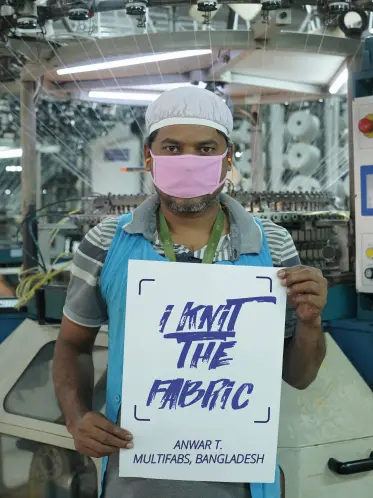
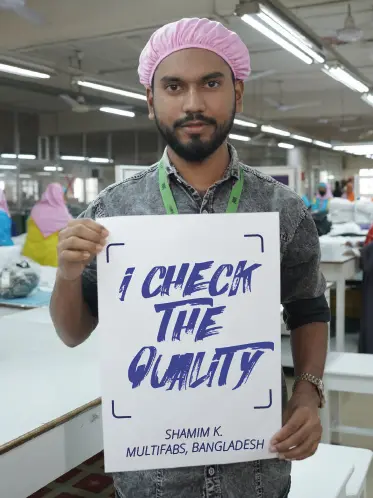
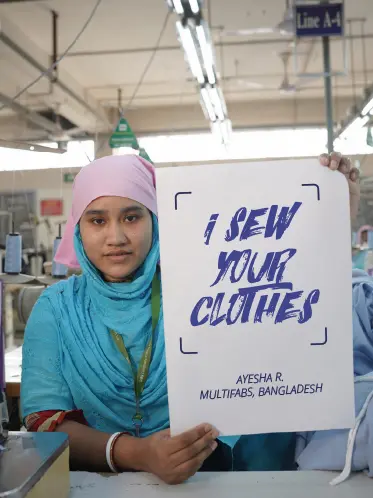
MADE BY PEOPLE – FOR PEOPLE
We believe in transparency and honesty – also in production.
That is why we invite you behind the scenes of production, where we focus on the people who make our clothing possible every day. From the first thread to the finished product.
COMPANY CERTIFICATES
Our company certificates show that we act systematically and responsibly throughout the value chain – with an emphasis on ethics, human rights and the environment.
OEKO-TEX® STeP
Confirms our responsibility as a company towards people and the environment. It guarantees high-quality clothing with a long service life, produced with consideration for working conditions and accountability.
Read about OEKO-TEX® →
Proud members of Better Cotton
We work towards responsible cotton production that benefits people and the environment. Better Cotton is sourced under the Mass Balance system and cannot be physically traced, but this system enables broader use of responsible methods.
Read about Better Cotton →
amfori BSCI
A common code of responsible sourcing and production outside the EU. It ensures decent working conditions, including a ban on child labour and forced labour, with particular emphasis on environmental protection, safety and fair terms.
Read about amfori BSCI →
Bureau Veritas
It is currently one of the world's largest companies in inspection, classification, consulting and certification. They provide services of the highest quality, helping clients meet growing challenges related to quality, safety, environmental protection and social responsibility.
Read about Bureau Veritas →
The International ACCORD
The Accord on Fire and Building Safety in Bangladesh (ACCORD) has, since 1 November 2023, been an independent, legally binding three-year agreement between manufacturers, retailers and trade unions in the textile industry, aimed at building a safe and healthy ready-made garment (RMG) industry in Bangladesh.
Read about the International ACCORD →
UN Global Compact
At ID® we strive to act responsibly and contribute to sustainable development. That is why we are proud to be members of the UN Global Compact, which forms the basis of our work with internationally recognised conventions on human rights, labour standards, environmental protection and anti-corruption.
Read about the UN Global Compact →